
Generator Sets
Chillers - Water Cooling Units
Fuel Storage Systems
Energy
Other Systems and Specials
Everything under control with smart monitoring
Remote monitoring of critical diesel engine installations on vessels is an important development in the maritime sector. Below is an overview of the key aspects, applications, and benefits.
What does it involve?
It concerns the remote monitoring of key diesel engine components on board vessels through sensors and communication technology. This includes real-time data collection, analysis, and automatic alerts in case of deviations.
Critical components that are monitored:
- Engine temperature
Coolant, cylinder head, exhaust gas - Oil and lubrication systems
Oil level, pressure, temperature - Fuel systems
Consumption, pressure, injector timing - Turbocharger and exhaust
RPM, pressure, temperature - Vibrations and noise
Monitoring for early wear detection - Generators and auxiliary systems
Frequency, voltage, load - Emission systems
NOx, SOx, CO₂, smoke development
Benefits of remote monitoring:
- Predictive maintenance → Prevents downtime and damage
- Cost savings → Fewer unnecessary inspections or replacements
- Efficiency → Improved fuel consumption and emission control
- Safety → Fast detection of risks or malfunctions
- Compliance → Meeting IMO / MARPOL emission regulations
Example:
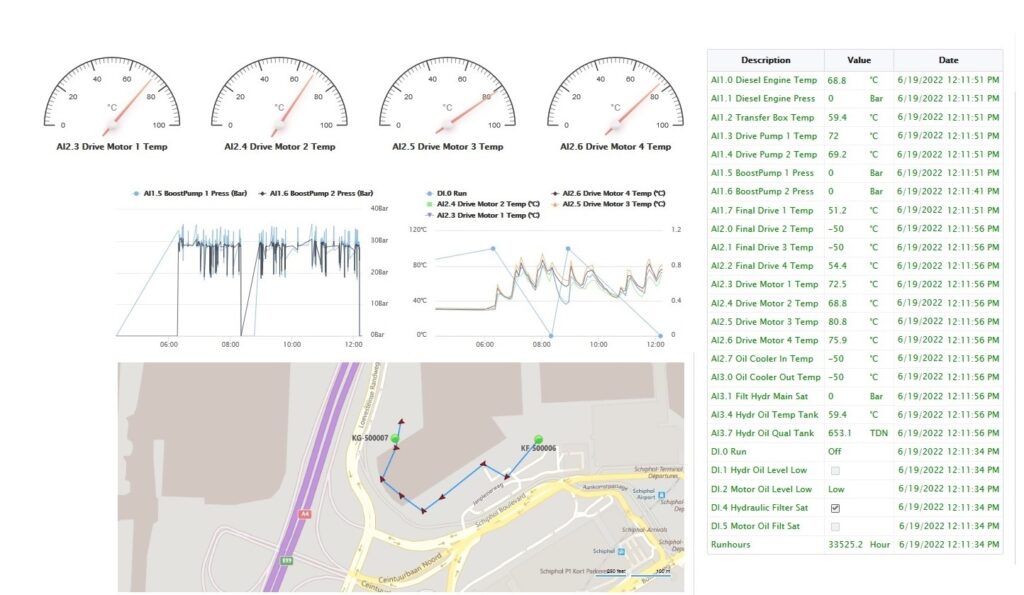
A shipping company installs a remote monitoring system across its fleet. Our remote monitoring system transmits all engine data in real time. This data is accessible through a web portal. Alerts can be configured for deviations. When turbo pressure deviates from the standard, an automatic warning is sent to the onboard engineer and the technical team onshore. This enables early intervention and helps prevent damage.